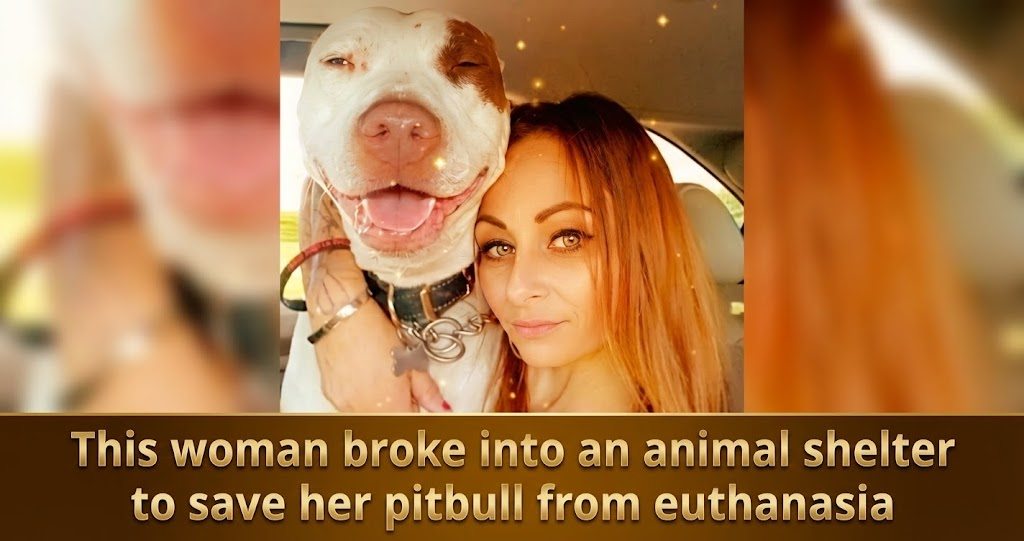
The story unfolded quietly in Oklahoma before quickly drawing national attention. A woman named Toya Stewart broke into a city animal shelter in the early hours of the morning and took her pit bull, Hazel, home. It wasn’t an act driven by thrill or recklessness, but by desperation. Hazel had been scheduled for euthanasia later that day after being labeled aggressive. For Stewart, the clock was running out, and the decision to act came from a place of fear, attachment, and disbelief that her dog’s life could end without her voice being fully heard.
Hazel’s case began with allegations that she posed a danger. Shelter officials cited reports of aggressive behavior, which under local policy placed the dog on a list for euthanasia. Stewart strongly disputed the claims. She insisted Hazel had never shown violence toward her family and described the dog as affectionate, gentle, and deeply bonded to the household. Like many owners facing similar situations, Stewart felt the evaluation process moved too quickly and left no room for context or rehabilitation.
As the scheduled euthanasia approached, Stewart felt she had exhausted her options. Appeals hadn’t worked. Time had run out. In the final hours before Hazel was to be put down, she entered the shelter without authorization and took the dog. The act was illegal, and Stewart did not deny that. But she later said the choice felt less like breaking the law and more like preventing what she believed would be an irreversible mistake.
The incident immediately ignited public debate. Supporters framed Stewart’s actions as a desperate stand against a system they believe unfairly targets certain breeds, particularly pit bulls. Critics argued that shelters must follow safety protocols and legal procedures to protect the public, regardless of emotional attachment. The case highlighted a long-standing tension between public safety concerns and the deeply personal bonds people form with their pets.
Breed stigma quickly became central to the conversation. Pit bulls are frequently associated with aggression in public perception, despite ongoing debate among experts about whether behavior is more influenced by environment, training, and treatment than breed alone. Advocates pointed out that dogs labeled “aggressive” are often evaluated under stressful conditions that may not reflect how they behave in stable homes. They questioned whether shelters have enough resources, time, or behavioral expertise to make such life-or-death decisions fairly.
For Stewart, the issue was never abstract. Hazel wasn’t a statistic or a breed label — she was family. The case forced many people to confront uncomfortable questions: How much trust should owners place in shelter assessments? Are current evaluation systems sufficient? And where should the line be drawn when law, safety, and emotional bonds collide? While authorities addressed the legal consequences of Stewart’s actions, the larger discussion continued, reaching far beyond Oklahoma.
In the end, Hazel’s story wasn’t just about a dog taken from a shelter. It became a reflection of how society views animals, responsibility, and justice. Whether Stewart is seen as reckless or courageous often depends on personal experience with pets and the systems meant to protect them. What remains clear is that the bond between humans and animals can push people to extreme decisions — especially when time runs out and the cost feels unbearable.