At 39, I thought I understood love well enough to stop romanticizing it. I’d had several long-term relationships, the kind that looked solid from the outside but never quite settled in my chest. I wasn’t bitter — just realistic. When Steve, one of my father’s longtime friends, came to visit one afternoon, I wasn’t expecting anything beyond polite conversation. He was 48, calm, kind, and carried himself with an ease that immediately made me feel safe. When our eyes met, something unexpected happened: not fireworks, but comfort. The rare kind that doesn’t ask questions.
We started spending time together slowly. Coffee turned into dinners, dinners into long conversations. Steve listened in a way few people ever had. He never rushed me, never tried to impress me. My father was overjoyed when he realized what was happening. He trusted Steve completely and loved the idea of him becoming family. Six months later, Steve proposed quietly, without spectacle. I said yes without hesitation. It felt steady. Right.
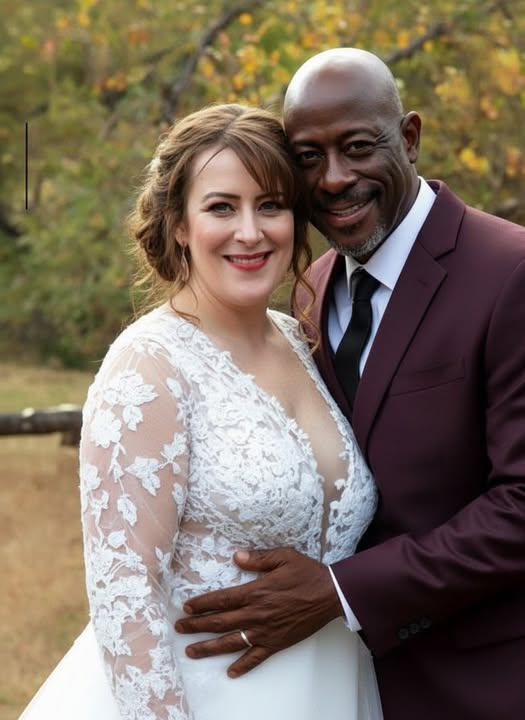
Our wedding was simple and beautiful. No drama, no excess. I wore the white dress I’d imagined since childhood, and for the first time in years, I felt fully present in my happiness. After the ceremony, we went back to Steve’s house — a place I’d visited many times, warm and thoughtfully kept. I excused myself to change, still smiling to myself in the bathroom as I removed my makeup and dress, replaying the day in my mind.
When I returned to our bedroom, my breath caught.
Steve was sitting on the edge of the bed, his back to me. Around him, the room looked different. The nightstand drawer was open. Inside were pill organizers, medical documents, and devices I’d never seen before. On the dresser lay a folded brace and a neatly placed medical alert tag. Steve turned slowly and looked at me with an expression I hadn’t seen before — not fear, but guilt.
“I’m sorry,” he said quietly. “I should have told you sooner.”
He explained then. Years earlier, Steve had been diagnosed with a progressive neurological condition. It wasn’t immediately visible. On good days, he functioned almost normally. On bad days, pain, weakness, and fatigue made even basic tasks difficult. He had learned to manage it privately, carefully. He wasn’t hiding out of dishonesty, he said — he was hiding out of fear. Fear of being reduced to an illness. Fear that if I knew too soon, I’d walk away before knowing him.
I sat down beside him, overwhelmed not by anger, but by the weight of what he’d carried alone. He told me he’d planned to explain before the wedding, then after the engagement, then after the holidays. Time kept passing, and courage kept failing him. “I wanted you to marry me,” he said, “not my diagnosis.”
I won’t pretend it was easy. That night, we didn’t talk about forever in dreamy terms. We talked about doctors, limitations, uncertainty. I asked hard questions. He answered honestly. I cried — not because I felt tricked, but because I suddenly understood the quiet strength behind his gentleness. The reason he moved slower. The reason he listened so deeply. The reason he never took ordinary days for granted.
In the weeks that followed, I had choices to make. I spoke with doctors. I spoke with my father. Most importantly, I spoke with myself. Love, I realized, isn’t the absence of difficulty — it’s the decision to face reality together. Steve hadn’t promised me an easy life. He had promised me truth, partnership, and respect. And now, finally, he had trusted me with the hardest part of himself.
I didn’t marry my father’s friend by accident. I married a man who knew vulnerability long before I did. Our marriage didn’t begin with a fairytale night — it began with honesty. And strangely, that made it stronger than anything I’d ever known.