A recent image circulating online has drawn intense attention, claiming that the newly elected pope delivered a “cruel one-word message” to the United States. The phrase spread quickly across social media, provoking strong emotional reactions before many people had time to ask an important question: what was actually said, and in what context? As with many viral moments involving global religious figures, the reality is more layered than the headline suggests.
The pope’s first public addresses following his election were closely watched around the world. Every gesture, pause, and phrase was analyzed for meaning, especially by audiences eager to interpret how his leadership might differ from his predecessors. In that atmosphere, even brief remarks carried outsized weight. When a single word from a speech or written message appeared isolated and shared widely, it was easy for it to be framed as a deliberate judgment rather than part of a broader message.
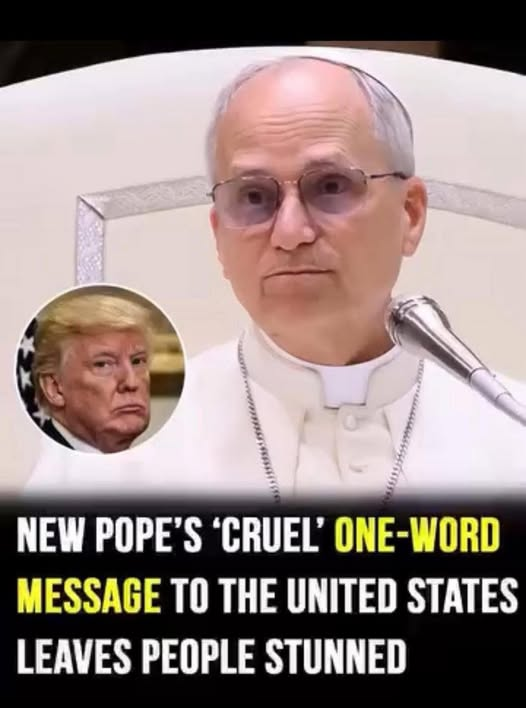
What often gets lost in viral circulation is context. Papal statements are rarely aimed at one country alone, and they are almost never intended as insults. The Vatican traditionally speaks in moral, theological, and humanitarian terms, addressing themes like responsibility, compassion, humility, peace, and accountability. When a word is extracted from a longer address and presented without explanation, it can take on a tone the speaker never intended.
In this case, the word that fueled online outrage was reportedly used within a broader reflection on global challenges — including inequality, conflict, and moral responsibility in modern society. The message was not directed at the United States alone, nor was it framed as condemnation. Instead, it reflected a recurring theme in Catholic social teaching: that nations with influence carry greater responsibility for their actions and their impact on others.
Public reaction, however, revealed more about modern media consumption than about the message itself. In a digital environment driven by speed and emotion, nuance struggles to survive. A single word can be transformed into a symbol, detached from its original meaning and repurposed to fit political or ideological narratives. For some viewers, the image confirmed existing beliefs. For others, it sparked confusion or defensiveness. Few paused to seek the full transcript or official Vatican clarification.
Religious leaders, especially popes, occupy a unique position. Their words are simultaneously spiritual guidance, moral reflection, and global commentary. This makes them particularly vulnerable to misinterpretation when messages are condensed or sensationalized. Historically, papal remarks that initially caused controversy often appeared far less provocative once their full context became widely understood.
What this moment ultimately highlights is the importance of slowing down before reacting. Headlines and images are designed to provoke instant emotion, but understanding requires patience. Whether one agrees or disagrees with papal perspectives, engaging honestly means listening to the complete message rather than a fragment designed for shock value.
In the end, the story was not about a “cruel word,” but about how quickly complex messages can be flattened into outrage. The pope’s remarks were part of a wider call for reflection — not a verdict against a single nation. As global conversations continue to unfold online, this episode serves as a reminder that meaning is rarely found in isolation, and that context still matters, even in an age that often forgets it.