Three days after my hysterectomy, I was still moving like glass might shatter inside me if I wasn’t careful. Getting out of bed felt like a negotiation with pain, each step slow and deliberate. That morning, I made my way into the kitchen holding onto counters, expecting—maybe foolishly—a small gesture of care. A cup of tea. A note. Something that said I wasn’t alone in this. Instead, what I saw taped to the fridge stopped me cold.
It was a piece of paper, neatly written, titled like an invoice. As I leaned closer, my heart sank. It wasn’t a grocery list. It was a bill. Line by line, my husband had itemized the “expenses” of taking care of me: driving me to the hospital, helping me shower, cooking meals, picking up prescriptions. He’d even put prices on emotional support and sleepless nights. At the bottom, circled in red, was a total. Over two thousand dollars. I had to grip the fridge to keep from collapsing.
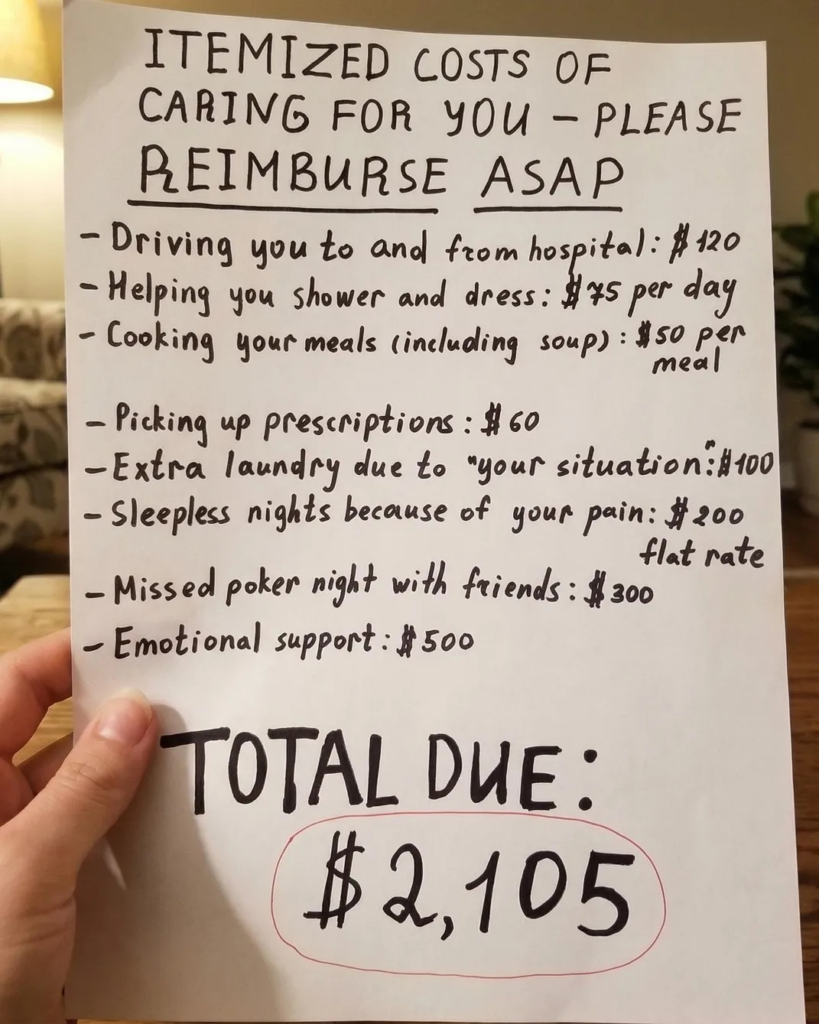
This wasn’t a joke. There was no smiley face, no punchline. It was written in his careful handwriting, the same one he used for work notes and budgets. I felt humiliated, reduced to an inconvenience with a dollar value. I had trusted this man with my body, my vulnerability, my life. We had stood together years earlier and promised “in sickness and in health.” Yet here I was, stitched and sore, being told—silently but clearly—that my pain was an expense.
I didn’t confront him right away. Instead, I went back to bed and cried—not loudly, not dramatically, but quietly, the way you cry when something breaks inside you. Then something else settled in: clarity. I realized that if he truly believed care could be priced, then I would show him just how much unpaid labor, emotional work, and invisible support I had given over the years without ever keeping score.
The next day, while he was at work, I made my own list. Calmly. Carefully. I itemized everything I had done throughout our marriage: managing the household, cooking thousands of meals, handling family logistics, remembering birthdays, being his emotional sounding board, sacrificing career opportunities so he could advance, caring for him during his illnesses without complaint. I researched market rates. I added totals. By the time I was done, the number dwarfed his little invoice.
That evening, I taped my list next to his on the fridge. When he came home and saw it, his face changed immediately. Confusion turned into discomfort, then defensiveness. I didn’t raise my voice. I simply said, “If we’re billing each other now, I thought we should be accurate.” The silence that followed was heavy. For the first time, he seemed to understand that care is not a transaction—it’s a commitment.
We talked long into the night. I told him how deeply his “bill” had hurt me, how unsafe it made me feel at my most vulnerable. He admitted he’d been resentful, overwhelmed, and careless with his humor—but intent didn’t erase impact. Respect isn’t proven by showing up with a calculator; it’s proven by compassion without conditions. That moment forced a reckoning neither of us expected.
I didn’t need his money. I needed his humanity. Whether our marriage would heal was a question still unfolding, but one thing was clear: I would never again accept being treated like a burden. Love isn’t about keeping score. And the true cost of disrespect is far higher than any number you can tape to a fridge.