In 2014, Derek Pfaff was a 19-year-old college student from Harbor Beach, Michigan, with a future that still felt wide open. Then, in a single moment, everything changed. A life-threatening accident left him with catastrophic facial injuries. He survived — something doctors didn’t take lightly — but survival was only the beginning. What followed was not a quick recovery, but a decade-long battle that reshaped every part of his daily life.
The injuries to Derek’s face were severe. Over the years, he endured more than 58 reconstructive surgeries, each one aimed at restoring function, comfort, or appearance. Hospitals became familiar places. Recovery rooms replaced dorm rooms. Progress came in inches, not leaps. Despite the surgeries, many basic human functions remained difficult or impossible. Eating solid food was a challenge. Speaking comfortably took effort. Wearing glasses — something most people never think about — wasn’t possible because Derek no longer had a nose to support them.
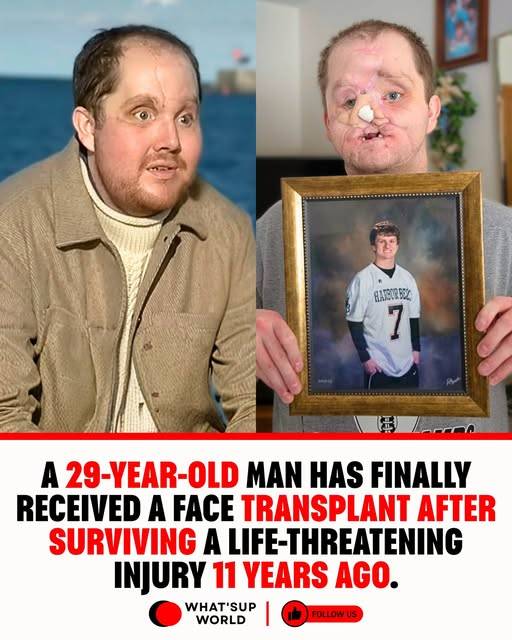
Living without a nose affected far more than appearance. Breathing was compromised. Smelling was gone. Facial movement was limited. Social situations became complicated in ways few people around him could truly understand. Derek continued forward anyway, adjusting to a body that no longer worked the way it once had. The emotional weight of constant medical care, public stares, and physical limitations quietly piled up alongside the physical pain.
For years, doctors worked to improve his quality of life using traditional reconstructive methods. But by 2024, it became clear that surgery alone could only go so far. That’s when a new possibility emerged — one that carried both hope and enormous risk. In February 2024, at the Mayo Clinic, Derek underwent a face transplant, one of the most complex medical procedures performed today. It was not cosmetic. It was functional, life-altering, and deeply serious.
The surgery marked a turning point. For the first time in nearly ten years, Derek could breathe through his nose again. He could blink naturally. He could swallow more comfortably. He could smile — not just emotionally, but physically. These are small actions most people never think about, yet for Derek, they represented independence, dignity, and relief. The procedure didn’t erase the past decade, but it gave him something he hadn’t felt in a long time: forward momentum.
Recovery after a face transplant is ongoing and demanding. It requires lifelong medical monitoring, physical therapy, and emotional adjustment. Derek doesn’t minimize that reality. Instead, he speaks honestly about it. Today, rather than focusing solely on what he lost or endured, he shares a message shaped by experience: don’t carry the pressure alone. He encourages people facing trauma, illness, or long recoveries to reach out, talk to someone they trust, and seek support early — not as a last resort.
Derek Pfaff’s story isn’t about miracles or shortcuts. It’s about persistence, medical advancement, and the quiet strength it takes to keep showing up when progress feels slow. His face transplant didn’t just restore physical functions — it returned pieces of daily life that most people take for granted. And by telling his story, Derek hopes others understand that surviving is only part of the journey. Healing, connection, and support matter just as much.