I wasn’t looking for her. Not really. But every December, when the house grew quiet and the lights went up, Susan—Sue to everyone who knew her—somehow returned to my thoughts. I’m almost sixty now. Thirty-eight years ago, I lost the woman I thought I would grow old with. Not because love ended, but because life got loud. College ended. Jobs pulled us in opposite directions. One unanswered letter became years of silence. We both married other people. Built lives. Still, each winter, I wondered if she was happy—and if she ever wondered too.
Last year, while digging through the attic for decorations, I found a faded envelope tucked inside an old book. My name was written on it in a handwriting I hadn’t seen since my twenties. Her handwriting. My hands shook as I opened it. The letter was dated December 1991. I realized, with a sickening certainty, that I had never read it. Maybe it was lost in a move. Maybe someone hid it. I’ll never know. What I do know is that one line tightened my chest: “If you don’t answer this, I’ll assume you chose the life you wanted—and I’ll stop waiting.”
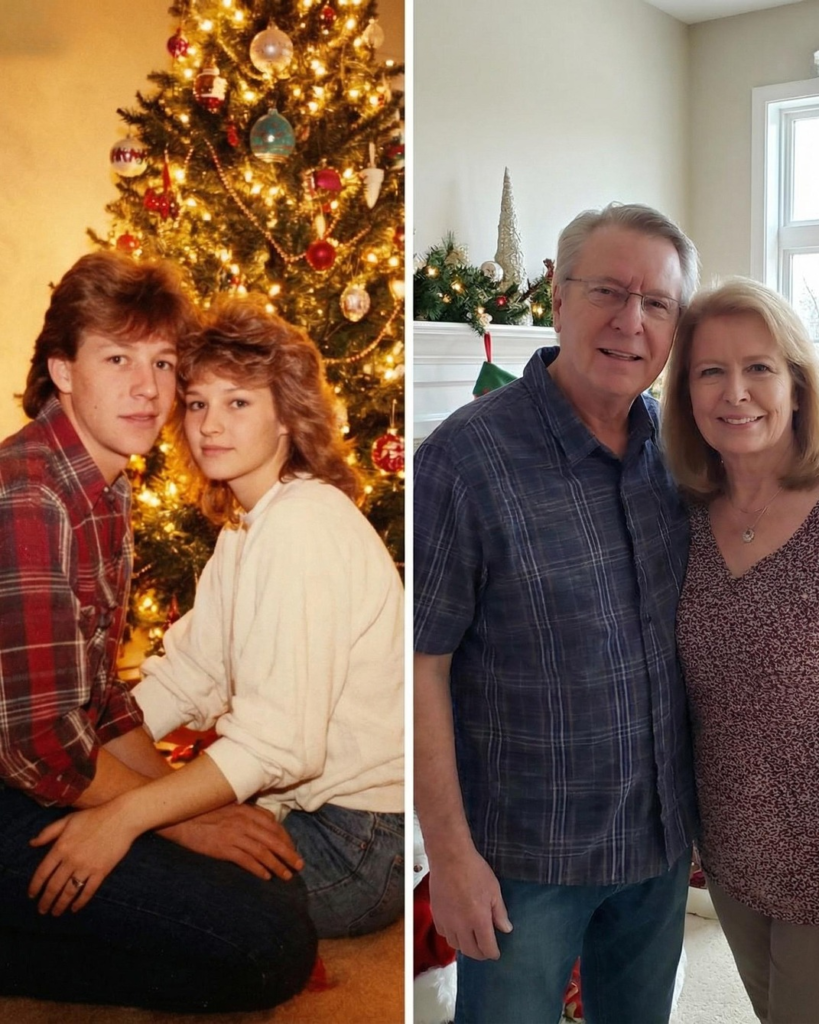
After reading it twice, I did something I hadn’t done in nearly four decades. I typed her name into the search bar. I didn’t expect much. People change names. Records fade. But the results appeared quickly—and stunned me. There she was, older, smiling gently in a community newsletter from a small town three states away. A retired elementary school teacher. Volunteer at the local library. Widowed. My heart pounded with equal parts hope and fear. I stared at the screen long enough to feel foolish, then wrote a short message—no romance, no pressure—just a question: “Is this Susan who once knew me?”
Her reply came the next morning. “It is,” she wrote. “I wondered if I’d ever hear from you again.” We exchanged careful emails at first, then long phone calls. She told me about her life—marriage, two kids, the years caring for a husband who passed quietly. I told her about mine—the marriage that ended amicably, the children now grown, the ordinary joys and regrets. At some point, she asked about the letter. When I told her I’d never read it, she was silent for a long moment. “I waited a year,” she said softly. “Then I let go.”
We decided to meet halfway at a small café just before Christmas. I arrived early, nervous like a teenager. When she walked in, time didn’t reverse—but it softened. The laugh was the same. The way she listened was the same. We talked for hours, not chasing what we were, but honoring what had been. There was sadness for the years we lost, yes—but also gratitude. We weren’t trying to rewrite the past. We were meeting the people we’d become.
By the end of the afternoon, we agreed on something simple and honest: to stay in touch. No promises. No expectations. Just truth. Love, I’ve learned, doesn’t always mean “what could have been.” Sometimes it means understanding, forgiveness, and peace. That letter didn’t reopen a wound—it closed one I didn’t know was still open.
Every December now, when the house grows quiet and the lights go up, I think of Susan—and I smile. Not because we found our way back to each other as we were, but because we finally found understanding. Some stories don’t need a different ending. They just need to be read.