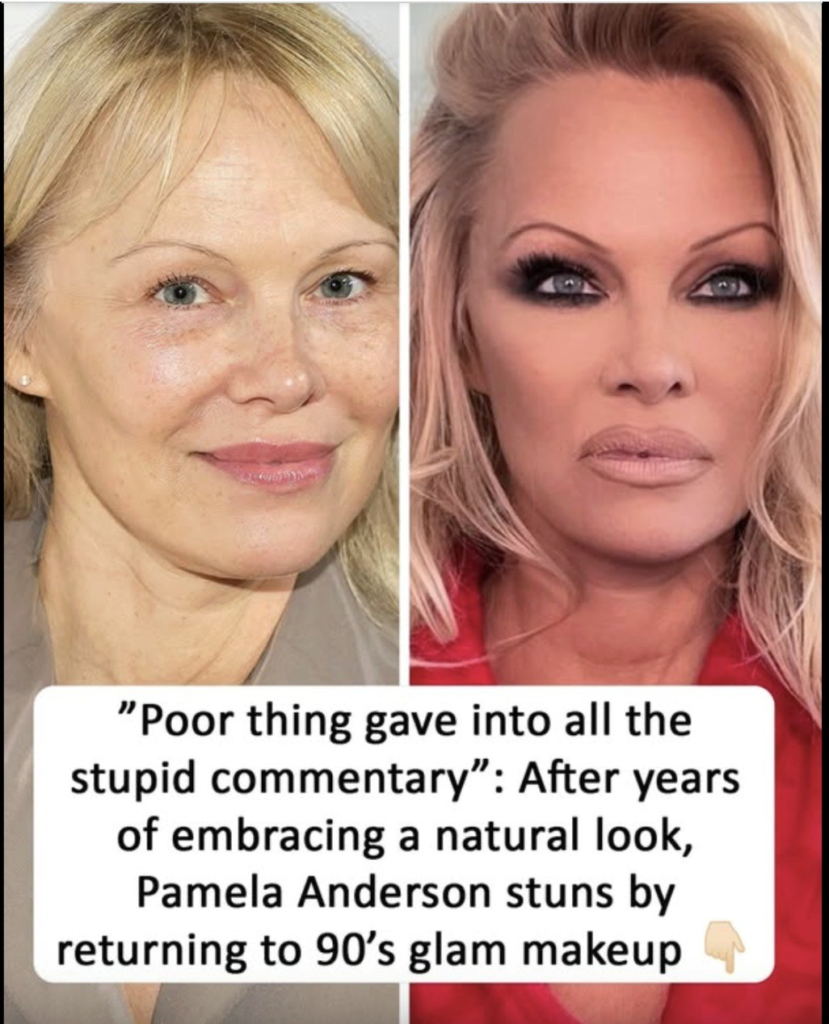
For years, Pamela Anderson surprised the public by stepping away from the heavy makeup that once defined her image. She appeared at events bare-faced, confident, and unapologetic, embracing a natural look that challenged long-standing beauty expectations in Hollywood. Many praised her for it, calling her brave and refreshing in an industry obsessed with youth and perfection. But when Pamela recently reappeared wearing bold, unmistakable 1990s-style glam makeup, reactions shifted quickly — and not always kindly.
Photos comparing her natural look with the dramatic return of smoky eyes, sculpted lips, and voluminous hair spread rapidly. Some people expressed excitement and nostalgia, while others responded with disappointment, framing her choice as “giving in” to pressure. The commentary revealed something deeper than makeup preferences. It exposed how tightly the public tries to control women’s appearances, especially as they age. Pamela didn’t just change her look — she disrupted a narrative people had grown comfortable with.
What many critics overlooked is that Pamela never declared her natural look a permanent statement or a rejection of glam forever. She spoke openly in the past about grief, simplicity, and wanting a break from constant performance. Her decision to go bare-faced was personal, not a manifesto. Returning to makeup does not erase that chapter. It simply adds another one. Style, like identity, is allowed to evolve without explanation.
The harshest reactions often came wrapped in false concern. Comments suggesting she had “fallen victim” to beauty standards ignored the possibility that she simply chose what felt right in that moment. Ironically, telling a woman she must remain natural to be authentic is just another form of control. Whether glam or makeup-free, the expectation that she owes consistency to strangers reveals how little autonomy women are truly granted over their own bodies.
Pamela Anderson has lived much of her life under relentless scrutiny. From her rise as a 90s sex symbol to deeply personal struggles played out in public, her appearance has always been treated as public property. Choosing to step away from makeup was one way of reclaiming herself. Choosing to return to it can be the same. Empowerment doesn’t live in one aesthetic — it lives in the freedom to decide without punishment.
The debate also highlights society’s discomfort with aging women expressing glamour. When younger celebrities wear dramatic makeup, it’s praised as confidence. When older women do the same, it’s often framed as desperation or denial. Pamela’s return to bold glam forces an uncomfortable question: why is self-expression celebrated at one age and criticized at another? The answer has less to do with makeup and more to do with ageism.
Ultimately, Pamela Anderson’s face is not a symbol the public gets to claim. It’s not a lesson, a statement, or a moral position unless she says it is. It’s simply her face — changing, experimenting, existing. Whether bare or fully made up, her choice reminds us that growth doesn’t move in straight lines, and empowerment doesn’t come with a dress code. The real issue isn’t whether she wore makeup again. It’s why so many people felt entitled to decide what that should mean.