Jeniffer C. boarded her flight expecting nothing more than a routine trip. She had paid extra for a window seat, something she rarely treated herself to, and settled in quietly. Shortly after takeoff, a nearby child began crying, and another passenger asked if she would be willing to give up her seat so the child could sit by the window. Jeniffer declined. She wasn’t rude, she wasn’t loud — she simply said no. That decision, made in a moment, would soon unravel her life in ways she never imagined.
Unbeknownst to her, another passenger recorded the interaction on their phone. The clip, stripped of context and explanation, was later posted online. In the video, Jeniffer appears calm but firm, while the crying child is audible in the background. Within hours, the footage began circulating across social media platforms, framed as an example of selfishness and cruelty. Millions weighed in without knowing who she was, what she had paid, or how the situation had actually unfolded.
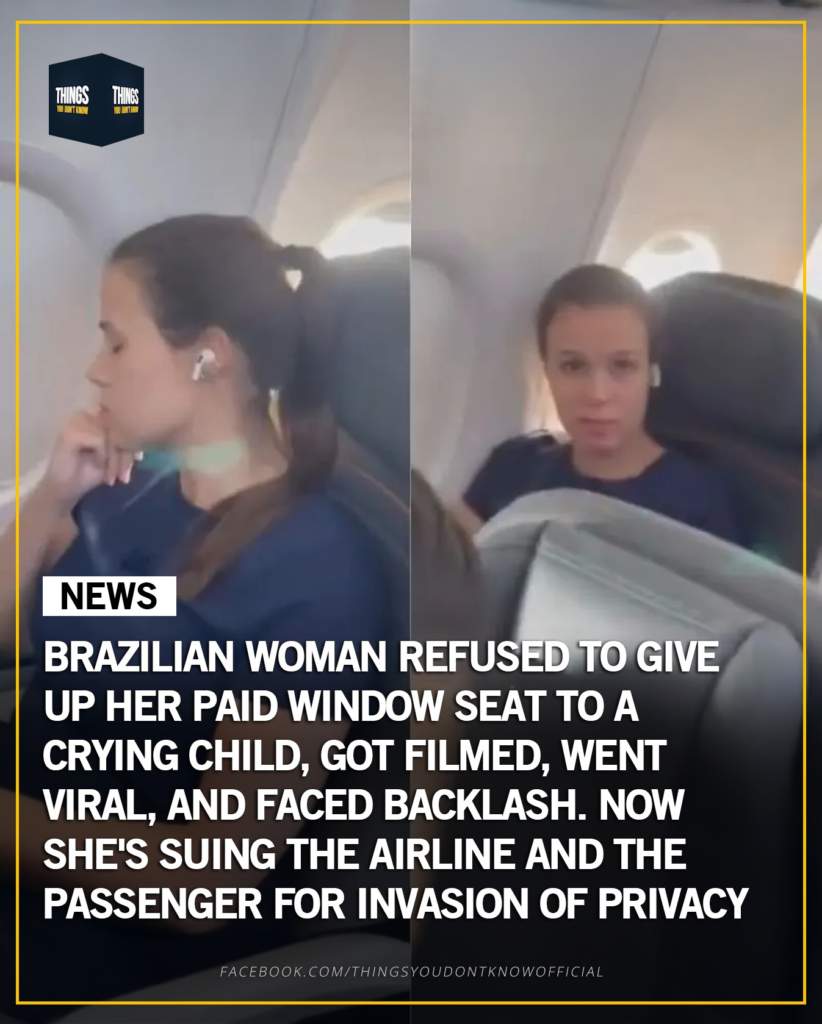
The reaction was swift and unforgiving. Jeniffer’s name was identified. Her workplace was contacted. Strangers flooded her accounts with insults, threats, and messages questioning her character. What had been a private moment on a commercial flight became a public trial. Soon after, she lost her job, her employer citing the negative attention and disruption caused by the viral backlash. The consequences extended beyond finances — she reported severe emotional distress, anxiety, and fear for her safety.
What made the situation especially painful for Jeniffer was the lack of nuance in the online narrative. She had not caused the child to cry. She had not raised her voice. She had not violated any airline policy. She had simply chosen to keep a seat she had paid for. Yet online outrage rarely pauses for complexity. In the age of viral content, a few seconds of footage can outweigh years of lived reality.
Now, Jeniffer is fighting back. She has filed legal action against both the airline and the passenger who recorded her, arguing that the video violated her privacy and that the airline failed to protect her from harassment. Her case raises difficult questions about consent, public shaming, and the responsibilities of both individuals and corporations in shared spaces. While airplanes are public environments, many legal experts argue that being filmed and broadcast to millions without consent crosses ethical — and potentially legal — boundaries.
The lawsuit has reignited a broader debate about expectations placed on passengers. Should people feel obligated to give up seats they paid for, especially when airlines profit from seat selection fees? Is refusing such a request inherently selfish, or is it a reasonable boundary? Many have pointed out that airlines routinely create these conflicts by separating families unless additional fees are paid, placing the burden on individual passengers to solve systemic problems.
Beyond aviation policies, the case highlights the immense power of online outrage. Social media platforms reward emotional reactions, not careful consideration. Once a narrative takes hold, it becomes nearly impossible for the person at its center to correct the record. Apologies are dismissed. Explanations are ignored. The punishment often extends far beyond the original act, reshaping careers, reputations, and mental health in lasting ways.
Jeniffer’s legal battle is still unfolding, but her story already serves as a cautionary tale. It asks whether society has become too quick to judge, too eager to film, and too willing to destroy real lives over moments we only partially understand. One paid seat, one recorded refusal, and one viral post were all it took to turn an ordinary person into a symbol — and to remind us how fragile privacy and compassion have become in the digital age.