You’ve probably noticed it in public places, at home, or even casually during conversations: men standing or sitting with one hand tucked into their pants. It’s a habit that sparks jokes, judgment, and sometimes discomfort. Many people assume it’s crude, careless, or inappropriate. But the truth behind this behavior is far less scandalous — and much more human — than most expect.
At its core, the habit is largely subconscious. Studies in behavioral psychology suggest that people often touch certain parts of their body for comfort and regulation, especially during moments of stress, boredom, or deep thought. For men, this area happens to be a common “neutral zone,” much like crossing arms, rubbing a neck, or resting a hand on a stomach. In many cases, the person isn’t even aware they’re doing it.
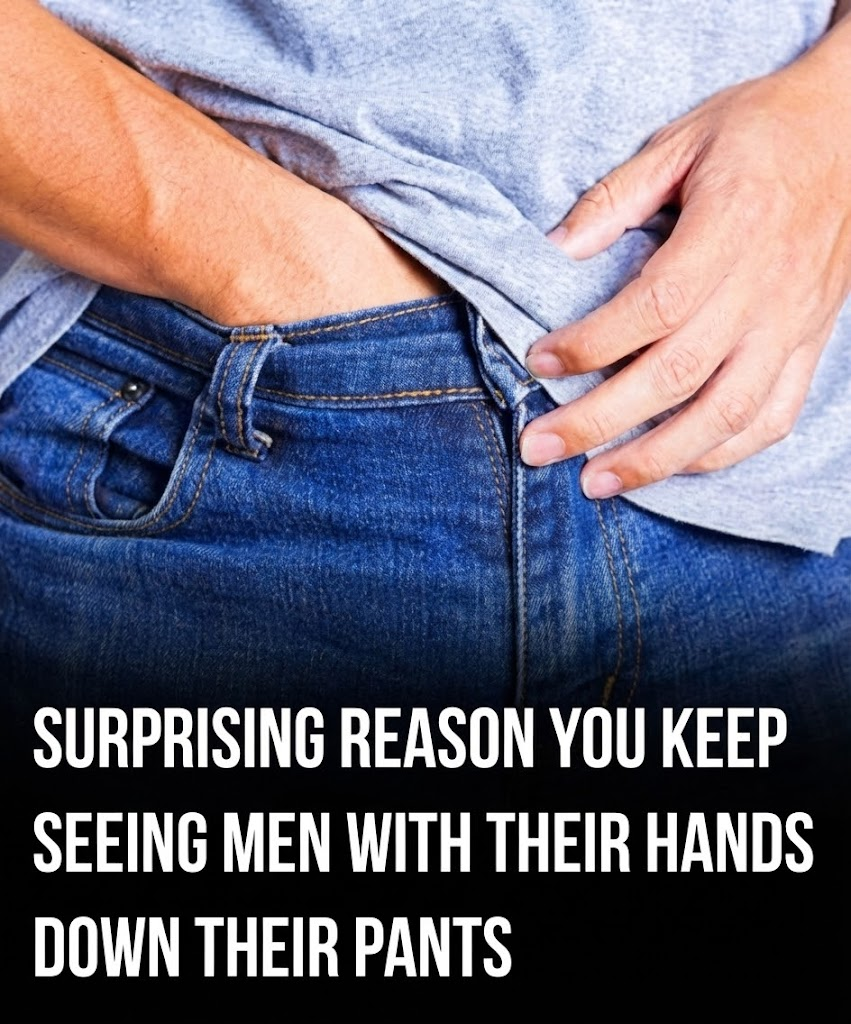
There’s also a strong biological component. The groin area contains temperature-sensitive anatomy, and small, unconscious adjustments help regulate comfort. Just as people pull at sleeves, shift waistbands, or adjust glasses, men may instinctively place a hand there to relieve pressure or maintain comfort. It’s not about exposure or intention — it’s about the body responding to physical cues without conscious thought.
Psychologists also point to self-soothing behavior. Humans often touch themselves in subtle ways to create a sense of grounding. Children suck their thumbs. Adults fidget with rings or tap their feet. For some men, resting a hand inside their pants offers a calming sensation, especially in familiar or private environments. It activates the parasympathetic nervous system, which helps reduce stress and anxiety.
Social conditioning plays a role as well. From a young age, many men grow up without strong correction around this behavior in casual settings, especially at home. Over time, the habit becomes normalized internally, even if it’s not socially appropriate in public. This doesn’t excuse the behavior in professional or shared spaces, but it helps explain why it happens without malicious intent.
Importantly, context matters. In public or professional environments, the habit can understandably make others uncomfortable, and awareness is essential. Most men, when the behavior is pointed out, are genuinely surprised and quickly correct it. That reaction alone supports the idea that the action is usually unconscious rather than deliberate.
Understanding this behavior doesn’t mean approving of it in every situation. Social norms exist for a reason. But recognizing that the habit is rooted in biology, psychology, and comfort — not indecency — can shift the conversation from judgment to awareness. Like many human behaviors, it sits at the intersection of instinct and habit, shaped quietly over time.
In the end, the reason you keep seeing it isn’t shocking, crude, or inappropriate by design. It’s a reminder that much of human behavior happens below the surface, guided by comfort and instinct rather than intention. Awareness — on both sides — is what turns an unconscious habit into a conscious choice.